


30 April 2011
Labor Day: Workers can't afford to quit despite complaints

Jakarta Globe - April 30, 2011
Elisabeth Oktofani -- Mulyadi is 25, but he's lost count of how many times in the past three years he has switched factories.
He works in one for a few months before moving to another, all within Jakarta's massive Kawasan Berikat Nusantara industrial estate in the Cakung-Cilincing area.
Thousands of contract factory workers are employed at the KBN in any given year. Some of those workers have worked within the KBN for more than a decade, despite regulations aimed to prevent it.
"I work mostly for garment factories. The money's the same everywhere at KBN. I earn Rp 1.38 million [$160] per month," Mulyadi told the Jakarta Globe.
"Why do I move around? Not by choice, I can tell you. They'll just give me a three-month contract or a six-month contract. That's a lot pressure for us [to turn down the offer], because we know how hard it is to get jobs nowadays," he said on Friday, two days before May Day demonstrations are expected to hit the capital's streets.
Elisabeth Oktofani -- Mulyadi is 25, but he's lost count of how many times in the past three years he has switched factories.
He works in one for a few months before moving to another, all within Jakarta's massive Kawasan Berikat Nusantara industrial estate in the Cakung-Cilincing area.
Thousands of contract factory workers are employed at the KBN in any given year. Some of those workers have worked within the KBN for more than a decade, despite regulations aimed to prevent it.
"I work mostly for garment factories. The money's the same everywhere at KBN. I earn Rp 1.38 million [$160] per month," Mulyadi told the Jakarta Globe.
"Why do I move around? Not by choice, I can tell you. They'll just give me a three-month contract or a six-month contract. That's a lot pressure for us [to turn down the offer], because we know how hard it is to get jobs nowadays," he said on Friday, two days before May Day demonstrations are expected to hit the capital's streets.
25 April 2011
Land conflicts between the TNI and the people rooted in 1965
lKompas - April 25, 2011
Reformasi TNI Belum Tuntas - Kompas. Senin, 25 April 2011
Jakarta -- Conflicts between the Indonesian military (TNI) and the people shows that internal reform within military as an institution is not fully complete. The security approach, like the era of Suharto's New Order regime, is still being used by the TNI, particularly when confronted by problems.
Speaking in Jakarta on Sunday April 24, The Indonesian Institute researcher Hanta Yuda said that the conflicts that have occurred between the TNI and the people are evidence that a number of agenda items still remain in the reform of the TNI. "The indication being that the TNI still uses violent methods to overcome problems, as it did during the previous New Order era", said Yuda.
Reformasi TNI Belum Tuntas - Kompas. Senin, 25 April 2011
Jakarta -- Conflicts between the Indonesian military (TNI) and the people shows that internal reform within military as an institution is not fully complete. The security approach, like the era of Suharto's New Order regime, is still being used by the TNI, particularly when confronted by problems.
Speaking in Jakarta on Sunday April 24, The Indonesian Institute researcher Hanta Yuda said that the conflicts that have occurred between the TNI and the people are evidence that a number of agenda items still remain in the reform of the TNI. "The indication being that the TNI still uses violent methods to overcome problems, as it did during the previous New Order era", said Yuda.
22 April 2011
Indonesia: Military open fire on protesting villagers in Central Java
 |
| http://fppks.blogspot.com/ |
Asian Human Rights Commission Urgent Appeals - April 18, 2011
Urgent Appeal Case: AHRC-UAC-079-2011
Dear friends,
Since Saturday April 16, 2011 several farmers have been injured by military violence in Kebumen regency, Central Java. The actions of the military personnel included beating, kicking and shooting, allegedly with rubber bullets caused several persons injured. Ten villagers were arrested after they protested against the occupation of their land by the military. On April 16, 2011 several villagers joined a procession to the graves of child victims of past military exercises in the area. Provocation by the local military escalated the situation. Some of the victims were brought to hospitals and many left the area due to fear of further violence by the military and police. The Asian Human Rights Commission (AHRC) is concerned about the ongoing arrests and sweeping operations in the area.
Urgent Appeal Case: AHRC-UAC-079-2011
Dear friends,
Since Saturday April 16, 2011 several farmers have been injured by military violence in Kebumen regency, Central Java. The actions of the military personnel included beating, kicking and shooting, allegedly with rubber bullets caused several persons injured. Ten villagers were arrested after they protested against the occupation of their land by the military. On April 16, 2011 several villagers joined a procession to the graves of child victims of past military exercises in the area. Provocation by the local military escalated the situation. Some of the victims were brought to hospitals and many left the area due to fear of further violence by the military and police. The Asian Human Rights Commission (AHRC) is concerned about the ongoing arrests and sweeping operations in the area.
8 April 2011
Indonesian government blamed for religious violence

The public outcry was immediate and loud, condemnation coming from ordinary Indonesians, moderate Muslim leaders, NGOs and rights activists. Human rights NGO Imparsial condemned the police inaction: “Once again, the police, as a state apparatus, failed to guarantee religious freedom by protecting the Ahmadis from violence”. The Wahid Institute blamed President Susilo Bambang Yudhoyono: “Violence against Ahmadis is an almost daily occurrence, yet the President does nothing to address this”.
4 April 2011
Against the France based company: Student solidarity against PT. Weda Bay Nickel

- Capitalism and the rotten political elite are the instigators of the people's poverty
- Dissolve the military guardians of capital
- Mining and natural resources for the people's welfare
Article 33 of the 1945 Constitution mandates that the country's natural wealth, mining, forestry products, plantations and agriculture, as well as the sea's riches throughout the territory of Indonesia be managed in the interests of the people's. The reality however is exactly the opposite. The capitalist economic system that is in effect in Indonesia ensures that the profits from the management of natural resources are the sole property of the capitalist class.
PT. Weda Bay Nieckel is a mining company that for 17 years has managed a nickel mine in Weda, Central Halmahera regency, North Maluku province. Between 1993 and 2011, the French based company has employed thousands of mine workers as contract, permanent daily workers and daily casual workers.
21 March 2011
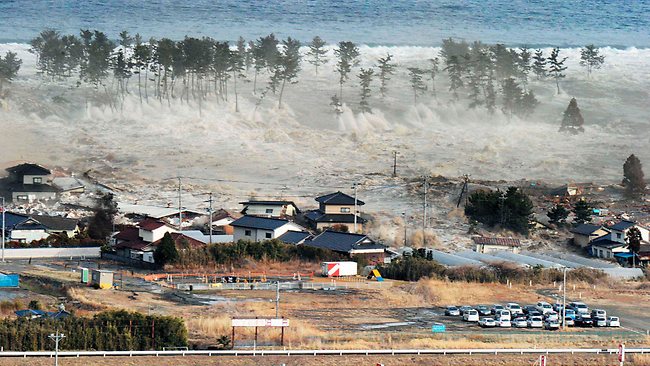
Appeal for financial solidarity with the victims and evacuees of the worst Northeastern-Japan earthquake/tsunami and Fukushima nuclear disaster
Japan Revolutionary Communist League (JRCL)
National Council of Internationalist Workers (NCIW)
March 17, 2011
On March 11, at 2:30 PM (JST), the tremendously powerful earthquake of magnitude 9 hit the vast area of Eastern Japan, comprised of Northeast and Kanto regions. The earthquake gave rise to the formidable tsunami, and the latter devastated numerous cities and towns all along the Pacific coast from the northernmost prefecture of Aomori to the southern Chiba prefecture. At the time of March 17, the number of deaths and missing persons is already close to 20,000, and the number continues to increase.
15 March 2011
Fighting for women's rights in Indonesia

Direct Action - March 2011
Zoe Kenny -- The story of women in Indonesia is inseparable from the development of the Indonesian nation itself. Indonesia was swept up in the global wave of anti-colonial national liberation movements in the mid-20th century, declaring its independence in 1945 after almost 350 years of Dutch colonial rule. The key leader of Indonesia's national liberation struggle, Sukarno, went on to became the country's first president.
Sukarno's presidency was characterised by his desire to develop the country in an independent direction, politically and economically. Sukarno was one of the founding members of the Non-Aligned Movement, which included other important Third World countries such as India and Egypt, and which aimed to forge a third path through the Cold War between the US-led capitalist camp and the Soviet Union. Sukarno's progressive, independent stance was broad enough to encompass friendly relations with the huge and popular Communist Party of Indonesia (PKI), which at the height of its influence had more than 20 million members.
Zoe Kenny -- The story of women in Indonesia is inseparable from the development of the Indonesian nation itself. Indonesia was swept up in the global wave of anti-colonial national liberation movements in the mid-20th century, declaring its independence in 1945 after almost 350 years of Dutch colonial rule. The key leader of Indonesia's national liberation struggle, Sukarno, went on to became the country's first president.
Sukarno's presidency was characterised by his desire to develop the country in an independent direction, politically and economically. Sukarno was one of the founding members of the Non-Aligned Movement, which included other important Third World countries such as India and Egypt, and which aimed to forge a third path through the Cold War between the US-led capitalist camp and the Soviet Union. Sukarno's progressive, independent stance was broad enough to encompass friendly relations with the huge and popular Communist Party of Indonesia (PKI), which at the height of its influence had more than 20 million members.
9 March 2011
National news compilation on IWD 2011

Kompas - March 8, 2011
Diskriminasi: Negara Kehilangan Kendali – Kompas. Selasa, 08 Maret 2011. <http://cetak.kompas.com/read/
Jakarta -- The institutionalisation of discrimination based on gender, ethnicity, religion and beliefs is causing women, particularly those from minority groups, to progressively lose their sense of security. The terror that they face includes threats to life.
"Since 1999 up until early March 2011 there were 195 discriminatory policies found at the national, provincial and regency level", said Arimbi Heroeputri from the Monitoring Division of the National Commission on Violence Against Women (Komnas Perempuan) during the launch of Komnas Perempuan 2010 Annual Report in Jakarta on Monday March 7. This, the 10th annual report by Komnas Perempuan marks the 100th commemoration of International Women's Day on Tuesday March 8.
Indonesia Women struggle against poverty, discrimination and exploitation

Zely Ariane[1]
2011 International Womens Day. International women day is still largely unknown among Indonesian women when compared with 1st May to Indonesian workers. This is not very surprising since the struggle for the liberation of women only developed several years after reformasi[2], with its mushrooming of different kinds of women's organizations, communities, NGOs, research institutions, women's legal aid etc., that openly advocated women's social and political rights.
Before reformasi, for 33 years the Indonesian people lived under the dictatorship of Soeharto who destroyed politically and organizationally the ideas of women's liberation and equality. Not only killing the ideas, the regime also killed and imprisoned thousands of women activists from Indonesian Women Movement (Gerwani) in 1966. Soeharto maintained the idea that women are the counterpart of men and the kind of organizations that were introduced were “housewives” organizations and family welfare groups.
Subscribe to:
Posts (Atom)